Write Like You Mean It
A reflection on my long journalistic ride through mass migration, geopolitics, sex, crime, American culture and other adventures with the organically written word during the first decade of The Cromer Reader
By Mark Cromer
It’s the late Spring of 2026 and the shadow of Artificial Intelligence continues to spread throughout the land; falling across classrooms, newsrooms, political operations and increasingly it would seem on creative content houses, music studios and even appearing in the wormholes of formally barren artist compounds where birthing anything less predictable or remotely original was always a tall order.
Skynet may not be have arrived just yet in a cognizant and malicious form, but the pace with which AI is now making its presence felt and the subsequent alarm bells that it has triggered are only going to increase. There seems to be a general consensus that bottling up AI’s vast functionality now would be as likely as eliminating porn from the Internet. Fuh-get about it.
The insidious nature of AI is rooted in its convenience. That’s a hard feature to tamp down let alone stamp out.
As I read The Wall Street Journal’s report on so-called journalist Nick Lichtenberg, a self-described scribe who uses AI from his editorial perch at Fortune who boasts of ‘writing’ six stories for publication a day by merely feeding press releases into his AI model, I can’t help but mildly empathize with those who feel the art and tradecraft of journalism is soon to be graveyard dead.
Lichtenberg’s estimation of how many stories he writes in a day, or his lysergic dream that led him to declare that he had written something like 600 stories in a matter of months, are another red-light warning that the bulk of professional publishers will simply be unable to resist producing content by harnessing the ghost in the machine that is Artificial Intelligence. Most remaining newspapers—roughly 5,500 remain in operation today across the United States, with an average of two closing their doors for good every week—will likely surrender to the temptation to gut their remaining staff to a handful of editorial janitors and rely on AI to produce what will pass as their news content.
Nearly half of all newspapers that are still rolling off the presses in America today are now owned by private equity firms and hedge funds, a fact that virtually guarantees their demise as a going concern and absolutely dooms any chance at remaining human-operated enterprises. At the dawn of the 21st Century, private equity had a mere toehold in the centuries old industry of newspapers, a five-percent stake in the vaunted tradition that produced titans like William Randolph Hearst, Joseph Pulitzer, Eugene Pulliam, Katherine Graham and the dynasties of The Chandlers and The Sulzbergers. By the end of 2025, Wall Street’s money men had devoured more than half the entire industry and they unleashed a ruthless death march of century-old newspapers that saw them herded into the camps of ‘new efficiencies’ where they were strip-mined of assets to be sold off, with real estate holdings the prime piece of loot. Magazines fared little better.
Despite the lingering conventional wisdom that the opening of the digital frontier marked the end of traditional print publications, the Internet in actual fact did not kill the newspaper and magazine giants of yore.
No, they were laid low by the filthy-eyed greed freaks that emerged from the cauldron of capital markets and private equity. It was these mutants who worship money and recoil from history, ethics and integrity, these deformed ghouls who are misery merchants descended upon the gleaming towers that journalists, writers, photographers, illustrators and artists had spent centuries building as mighty lighthouses of informed thinking for the masses to harness for their betterment, and pillaged them like drooling Orcs feasting upon the last vestiges of Western enlightenment and humanity.
It’s not that I take the organized gang rape and mass murder of print publishing personally, of course not, I just would like to see these foul and fetid Orcs disguised as businessmen and badass boss women, these dank and slimy creatures who destroyed our magnificent publications, rounded up, paraded through the town squares of America and summarily shot for crimes against an intelligent humanity.
That’s all. Is that too much to ask?
Oh well, come what may, Rick and Ilsa will always have Paris and I will always have my own private Alamo, my journalistic freeform alpine redoubt: The Cromer Reader.
It’s a little strange now looking back at the spring of 2016, that was the season when, to mix metaphors from a legendary Texas last stand to a pirate ship, I christened my Queen Anne’s Revenge, ran up The Jolly Roger and set sail on the digital seas, especially considering the details of how my small-if-earnest soapbox on the worldwide whatever became operational. It reminds me of Hemingway’s line about bankruptcy overtaking him: “Little by little and then suddenly all at once.”
The idea for The Cromer Reader had been gestating in various incarnations for years, dating back to around 2011, first conceptualized in collaboration with what was then my tight inner-circle of journalistic colleagues, attorneys and fellow hedonists and it was initially imagined as a showcase of my late night, freewheelin’ correspondence on all manner of topics and subject matter yet notably anchored in the intersection of politics and pussy.
And the politics of pussy—an evergreen if there ever was one.
As that ensemble eventually faded to the mists of mortality, divergent paths and expirations dates, ‘life’ as they call it, I kicked the idea of The Cromer Reader down the road with a new crew of buddies who were also veterans still on tour in what might be best described as The Drinking Life. Don Grantham and his cohort of creators at Evolve Media became involved and a lot of time was spent amidst gloriously languid ‘porch sessions’ at his epic crash pad on College Avenue in Claremont, with the chiminea glowing from dusk to dawn as we drank our way into and out of various conceptual iterations of the site. I recall at one juncture we were kicking around a potential feature entitled ‘Beheading Videos I’d Actually Watch’ that would draw upon a fantastical scenario of a steady supply of pontificating Hollywood ‘stars’ that we’d imagine had been captured by ISIS and cast in one of that terror group’s grisly productions. The concept was to photo-shop a celebrity head onto the grim-but-iconic opening still-frame of Nicholas Berg seated in front of his five masked Islamist killers in 2004, and run a description of the Tinseltown denizen’s transgressions which would be centered on either their sheer vapidity, i.e. Paris Hilton or Kim Kardashian, or based around their progressively woke politics that decried Western Civilization as evil and corrupt, i.e. virtually every A-lister on the red carpet today.
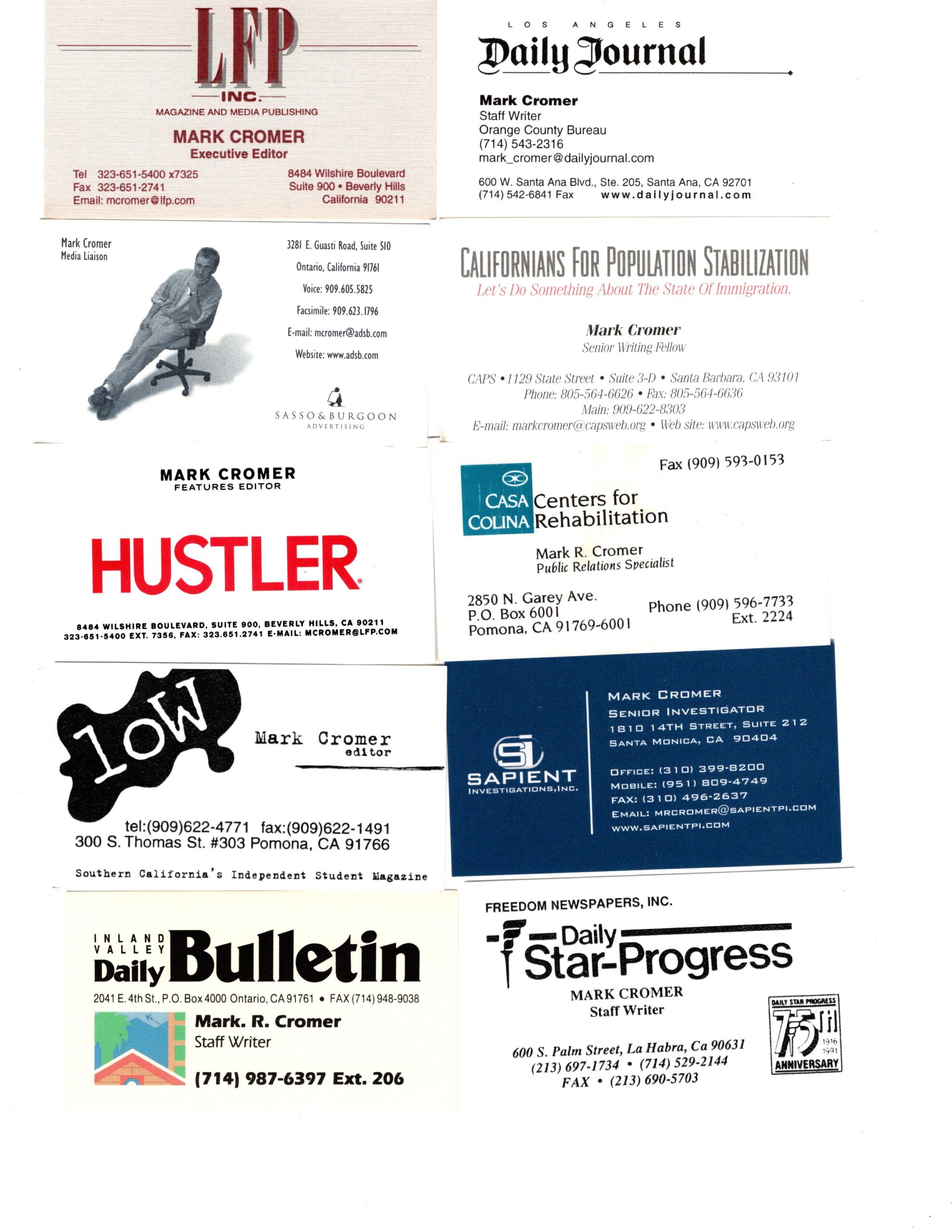
The faux beheading column was actually a riff on a feature I came up with during my tenure as an editor at Hustler many years earlier. Back then in ‘LarryLand,’ I had been kicking around ideas with my friend and then-collaborator Bruce David, who had been one of Flynt’s primary lieutenants since 1975 and had come up with the idea for the infamous ‘meat grinder’ cover for Hustler. I mentioned to Bruce that I had just seen a clip of Julia Roberts at a Hollywood awards show in which she feigned utter shock at winning one award or another but then promptly proceeded to turn into a prancing show pony for the paparazzi, flashing her trademark smile all the while.
“I just couldn’t get over that yapper of hers,” I remarked. “See, now that’s what I call a high-capacity piehole. My God, she could comfortably accommodate a couple of John Holmes-caliber meat sticks down that toothy manhole of hers in one swoop. Maybe more! We’d need some orthodontic forensic analysis to factually determine just how much raw cock Julia Roberts could stuff down her gullet all at once, of course, as we have to follow the science.”
Bruce lifted his whiskey glass a little higher and chuckled: “Mark, I believe you might be on to something. We could assess the diameter of Roberts’ mouth and then determine how many man-missiles it could accommodate at one time. And yes, we must follow the science.”
Such was editorial brainstorming at Hustler back at the cusp of Millenium.
We ran through a few iterations, as I recall, before landing on one that featured a shot of Julia Roberts, mouth obscenely agape amid some procession along the red carpet, and then had our art department populate her oral orifice with a series of circles that equated to the circumference of a man’s penis. I think we determined that she could fit three or four in her mouth at full house status. That illustration, which I believe ran as a stand-alone in the Bits & Pieces section of the magazine, was later turned into a recurring feature called ‘What Would She Look Like with a Cock in Her Mouth?’ that took annoying female celebrities on the red carpet and grafted a salami pole into their mouths courtesy of modern software.
So, at various junctures of conceptualizing The Cromer Reader, there was some consideration given to offering more fast, hot and politically incorrect takes on the Hollywood glitterati, more visually-anchored takedowns of the type I had developed in Hustler and before that at Low Magazine. The idea of mocking fame-hungry celebrities by fake casting them in ISIS videos like something out of Natural Born Killers was fun, worth a chuckle.
But in the end, I decided that I just wanted to develop a showcase that featured long form writing and allowed me the opportunity to write what I wanted to write, how I wanted to write it and when I chose to do so. I wanted freedom at my fingertips. It wasn’t intended to be a competitive commercial site. It wasn’t monetized. It didn’t feature merchandise. It was just a writer’s garden and came with a bullhorn attached.
While still in the Evolve Media orbit, friend and renaissance man Paul Morquecho cut a couple of video trailers for the still embryonic site, using a soundtrack of the Rolling Stones Midnight Rambler and then Don Henley’s Dirty Laundry against a montage of photographs and video clips that captured elements of my various adventures in American journalism and my long walk on the wild side. Kurt Gaiser, another member of Evolve’s Claremont core that possessed keen artistic sensibilities along with programming skills, designed some beautiful early prototypes for the splash page that brought to life my concept of The Cromer Reader being a digital magazine a la Newsweek or Rolling Stone that would offer iconic cover photos with live coverlines taking readers inside the site to various stories.
Yet as time went by, the currents of life once again saw another crew that had tinkered and toyed with the concept of The Cromer Reader over the years drift apart into different pursuits and passions and the project was shelved once more.
As the dawn of 2016 opened, I found myself freshly out of a relationship with a woman who had been my long-time lover. She had first appeared in my life in the late 1990s when we dated and had then ‘checked in’ occasionally during the 2000s before finally following me to a conference that I was speaking at in the fall of 2009 in Washington D.C., where she laid out her plans to leave her clueless husband and expounded her desire to be with me. We had kept the affair going in various fits and spasms as she moved from Florida to Texas and then finally to Washington state, where she finally separated from the walking wallet who had mistakenly thought he was something more to her beyond a bottomless ATM. She finally got her own apartment in Bellevue in 2014 and then moved into a home in Issaquah that she and I had picked out as ours in 2015.
I was splitting my time between Claremont and Puget Sound, and while I really loved her and we had a ball together, it became inescapable that I was planning a future while she was planning on playing every side of the street and up and down the alleys as well. She never filed for divorce and her estranged and humiliated husband seemed to pathetically relish writing her checks each month as we jetted off to places like Hawaii. Moreover, she seemed to revel in the inescapable sadism that was so evident in her actions, obliquely teasing the prospect of some eventual reconciliation while slowly killing the poor sap; leeching him financially, spiritually and emotionally until he was but a ghost, or as I called him: ‘Dan the Invisible Man.’
I parachuted out of my smoldering relationship with the cheating wife as 2015 closed out (with a weekend reunion in 2017 being the last in-person hurrah with her), satisfied with the knowledge that by coming inside of her more than 700 times in the preceding years I had indeed carried my share of the burden and had truly done all that I could for her and her pathetic ghost-husband. I did consider sending them a bill for services rendered with a balance due of $70,000—calculated at deeply discounted $100-per-pop inside her and prorated against some of the perks I had enjoyed, like raiding her husband’s liquor cabinet, of course—but in the opening months of 2016 I decided that it was as good a time as any to finally launch The Cromer Reader.
So I put the cheating wife in my rearview and got down to making this website happen.
Instead of overthinking what it could be and going down the conceptual rabbit hole once more, I decided to create a fairly straight forward website that would serve as a non-commercial showcase for my writing past and present. I would include some of the emails from decades earlier that had served as the genesis for the original concept of the site, those vodka-fueled dispatches I was prone to firing off to my circle of fellow writers in Los Angeles, creating a feature entitled Dispatches from The Edge, and I also kept the original title for the site that my old crony Samuel Gideon Anson had come up with back when we was still involved with developing it: The Cromer Reader.
I called up another old pal, Jesse Ramirez, who back in 2005 had been my neighbor and drinking buddy in Claremont and who was the computer coder and designer who put together my first foray online since my years with Flynt’s organization, building a small digital display case called MarkCromer.net that went live during the mid-2000s. I sat down with Jesse again over a period several weeks in early 2016 and he cranked out what became The Cromer Reader, using a WordPress format and an Envato Themeforest’ template called Newspaper. Using a partially obscured photograph of me writing by hand back at one of my favorite bars, Casablanca, a screwdriver on the bar in front of me and a cigarette smoldering in the ashtray, Jesse put together a topside banner with a custom typewriter font for the title and its subhead of ‘Est. 1965 Reportage Reflections Riffs Ruminations.’
I back-filled the site with dozens of stories that had been previously published by various newspapers, magazines and media outlets in the decades prior and when it went live in the spring of 2016 The Cromer Reader debuted with some editorial meat on its bones.
Initially I had envisioned updating the site regularly, adding a new shorter column of 1,000-words or so several times a week under The Daily Read fixture along with a longer read of 3,000-words or more once a week under The Weekly Read. But I would quickly discover that was a rather ambitious goal, even for veteran professional writer like me who cut his teeth as a journalist in the sink-or-swim churn of daily newspapers. Maintaining that level of a prolific output while also handling my professional responsibilities as a senior staff investigator at Sapient Investigations, the boutique business intelligence firm I opened on the ground floor back in 2010 with the firm’s owner David Cogan, was just not really in the cards. Being newly single gave me more time to focus my energies on something more productive than catering to the whims of a married harlot—and I mean ‘harlot’ in the best possible sense of the word, for she’ll always be one of the most accomplished Jezebels I have ever encountered—but cranking out new material to read four or more times weekly for a non-commercial showcase was a bit enthusiastic, but it was a sweet dream nonetheless.
The site’s eventual intermittent programing nature also came to suit me, since I wanted a platform to post to on my schedule alone.
In the decade that has unfolded since The Cromer Reader went live, it has proven to be every bit the fun little ship I had envisioned it as being, a workhorse of sorts that delivers the copy I publish through it in a straightforward and effective manner. The non-commercial aspect of it also highlights something that is near and dear to my heart these days: the uninterrupted reader experience, whether it is just a few sets of eyes pouring over my copy or tens of thousands of readers, the intellectual consumers of The Cromer Reader will not be distracted or deflected or defeated by relentless pop-up ads, annoying videos and the horrifically damaging practice that the brain trust at Breitbart developed years back of interspacing every other sentence with an advertisement. What does it say about a publisher that offers one or two lines of copy and then an advertisement? It says a) the publisher really doesn’t give a shit about the readers’ experience and b) the publisher doesn’t really believe that the stories and materials they are publishing are worth enough to deserve an unfettered airing, a clear road for the reader to navigate and open skies above for them to consider what it is they are taking in.
Such sites are actually just programming ads and stringing some loose knit copy around it.
I also knew from the outset that I would not make The Cromer Reader an interactive affair, there would be no reader feedback interface save that of my email connected to the site. Having started my journalistic career back in the newsrooms of the old daily and weekly newspapers of the late 1980s and 1990s, I witnessed what a complete disaster it was when news organizations had transitioned into digital formats but jettisoned their standard rules of engagement for readers to share and vent and riff and rave. Back in the analog era of print, readers who wanted to praise or piss all over a writer’s work would have to bestir themselves to type out or handwrite a Letter to The Editor and get it to the Post Office, an act alone that probably eliminated 95% of all the hate mail and love letters that would otherwise have poured into the newsrooms. But even for those who were inclined to write, seal, stamp and mail, they also had to disclose their true identity and provide contact information to confirm it. Again, requiring even such basic information proved to be a very useful and effective filter, one that weeded out most of those who were inclined to hurl threats and other forms of abusive correspondence.
When you have to put your name on it, people tend to think twice or more and settle into producing something that is a useful critique rather than a passing cheap shot or insult.
Publishing platforms in the late 1990s and through the early aughts completely discarded all standards as applied to reader feedback, allowing instead anyone to say virtually anything anonymously, i.e. using upscale monikers that added real gravitas to their musings like ‘MutherFer69’ or ‘FagSlayer666’ or ‘YoMamaWantMe’, which proved to be real confidence builders among the core readership and, worse still, the staffers of the publications. Editors would shrug and offer throwaway lines like “Well, it’s the Wild West once more, we just have to see our way through it” but it made absolutely no sense whatsoever and was exceedingly damaging both in the immediate sense and over the long term.
After spending a century demanding writer accountability, most publications great and small across the country simply threw it all away virtually overnight while pretending the vapid psychobabble musings of freakish dolts like Arianna Huffington were somehow divine wisdom lighting the path forward. Huffington happened to be one of the idiots who declared in her Aristotle Onassis accent that people would only pay for two types of content online: porn and stock advice. So according to Princess Arianna—she who had married a millionaire fag and bred with him only to later profess shock that he was really into, well, Greek, just not so much with her—Vivid Video and The Wall Street Journal could survive charging for their content while every other newspaper and magazine should just accept that in order to keep up with the times they would have to literally give away the only commodity they had.
Watching all of that unfold in real time from various newsrooms, when I launched The Cromer Reader I had no intention whatsoever of having a reader feedback function such as the meaningless ‘Comments’ sections that dotted most of the web like unattended dog parks.
Too much shit to clean up.
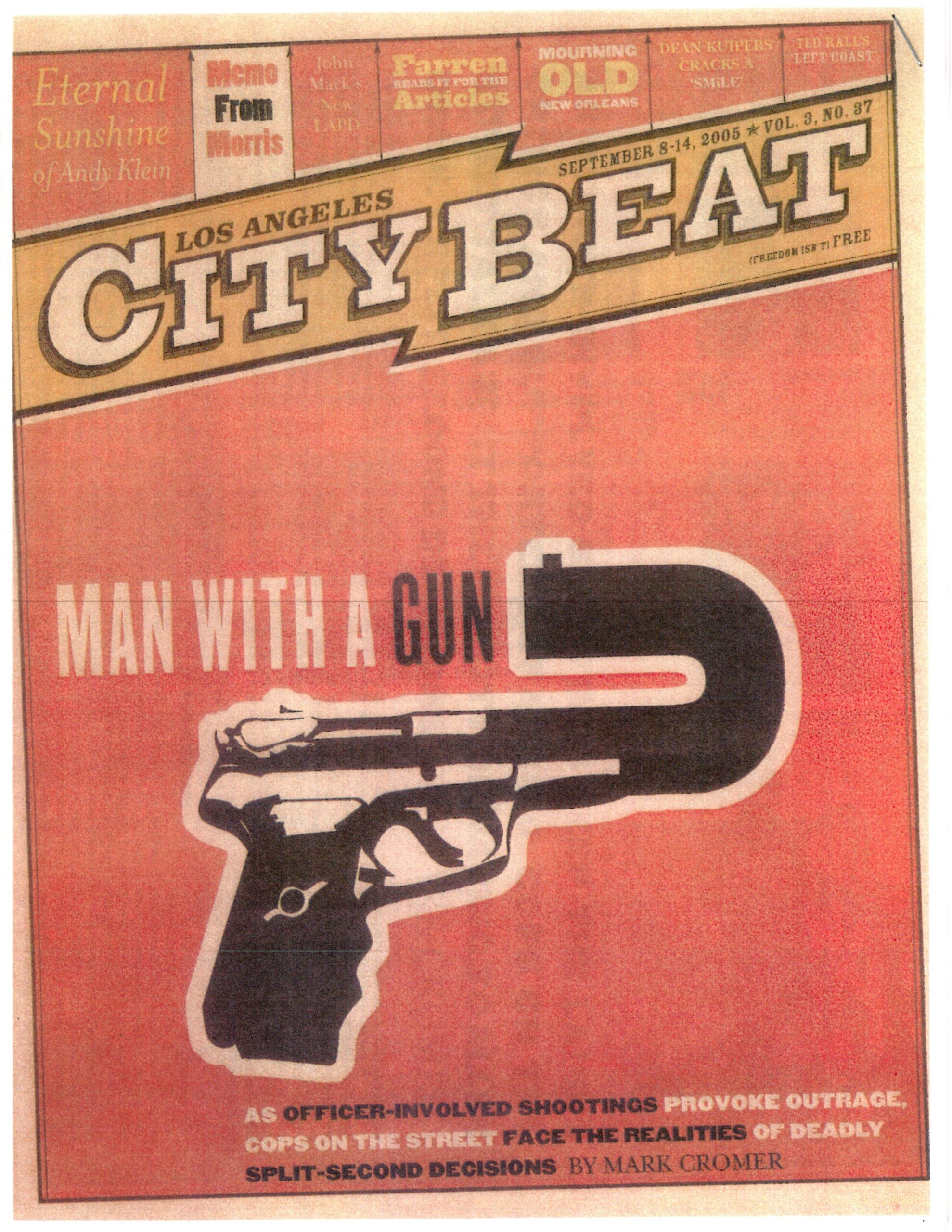
As I look back across the first decade of The Cromer Reader, I can say I am mostly pleased with the breadth and depth of the stories I have published across it. I revisited my days covering the crime beat for newspapers, running stories like Man With a Gun, which had been a cover story for Los Angeles City Beat in 2005 and offered a deeper dive into fatal police shootings with a focus on officers that had had to dump bad guys in the line of duty and what they went through before, during and after pulling the trigger. The real ‘get’ in that feature story was a detailed account by Sgt. Richard Madden of the infamous ‘Newhall Shootings’ in 1970, when two ex-convicts decided to gun down four California Highway Patrol officers. A young Los Angeles County Sheriff’s deputy at the time, Madden was among the lawmen who cornered one of the killers in a farmhouse, exchanged gunfire with him and then, amazingly, spoke with the killer on the phone by happenstance through a line that ran from the farmhouse to the garage where he had taken cover. Not long after he hung up the lawmen stormed the farmhouse and Swiss-cheesed the scumbag cop-killer.
In 2016, I recounted my years on the crime beat with Murder, I Wrote, an essay which opens with me taking the witness stand in capital murder case Los Angeles County prosecutors had brought against Morrad Modle Ghonim. A quarter-century before, Ghonim’s 17-year-old wife Vicky had been brutally gunned down in a park in front of him and their newborn baby. I covered the killing and was the only reporter, working the beat for Thomson Los Angeles Newsgroup at the time, who had interviewed Ghonim, who was 19 at the time, and my multi-story coverage of the murder had made its way into the homicide detectives’ ‘murder book.’ In the immediate aftermath of the murder, Ghonim had sat down with me and offered a rather detailed account of how the killing of his wife had unfolded. Once the homicide dicks broke the case open decades later, they had his detailed account on the record though my stories, which is why I was called to testify. The experience took on a grim trip down memory lane of all those years I spent covering carnage across Southern California and I harnessed it into a feature for The Cromer Reader, amply illustrated with actual crime scene photos. Ghonim was convicted and sentenced to life in prison.

Another high-profile homicide case I wrote about much earlier in my journalistic career and that I decided to feature on The Cromer Reader was Eyes on the Justice System, which recounts the battle of Coleen Davis to keep her teenage son’s killer behind prison bars. I originally reported and wrote a package of stories on the killing of 15-year-old Denis Benjamin Davis and the subsequent hunt for the killer, the arrest, trial and conviction of David Kuns and his proposed parole less than two decades later. Kuns murder of Davis had been what homicide detectives labeled ‘a thrill kill,’ meaning the local thug had decided to kill the diminutive teen for the joy of it, for the sick kick he got in taking a life. I still recall writing the lede: “Denis Benjamin Davis probably never saw his death coming, though it drove by him several times the last night of his life.” Sitting next to me in the newsroom was my old friend and colleague Anne LaJeunesse and she asked to me read her the lede at one point. When I did, her eyes lit up, she smiled, nodded and said: “It’s going to be a good read.”
And it was a good read.
But it was also a horrifying story about a young mother letting her teenage son attend his first neighborhood party—against her better judgement—and never seeing him alive and in one piece again. Once Kuns, who had also been at the party hunting for a victim, decided on Davis as his target, he had stalked him with an accomplice, overpowered him, forced him into a car and proceeded to slash and stab Davis in a soul-curdling frenzy. Kuns then threw him off the side of Turnbull Canyon Road, but when he could still hear Davis moaning in agony, he hiked down to his victim in the dark and bashed his head with a rock.
Over the course of researching the story, I repeatedly met with and interviewed Coleen Davis and also interviewed the cops who worked the case in April 1979. One of the detectives opened the old homicide file for me downtown at LA’s historic Hall of Justice—after I was given a teasing peak at the Manson Murders archive—and I spent a day pouring over the file, which included crime scene photographs and postmortem shots of Ben Davis. In rigor mortis repose, the 15-year-old indeed looked like the party he attended was at 10050 Cielo Drive in Benedict Canyon on August 8, 1969, stretched out on the coroner’s table his corpse revealed a nauseating number of ferocious and gruesome slashes and deep stab wounds that should have been a criminal justice billboard that read to any and all who gazed upon such evil handiwork: ‘Death Penalty or Worse for Whoever Did This.’
Along with Thomson Los Angeles Newsgroup photographer Greg Andersen, I traveled to Tracy, California, to interview convicted killer David Kuns and then attend his parole hearing. Kuns had told me before the hearing that he didn’t expect to be granted parole. When I asked him why, he replied: “Because you’re here.” He said a parole board that are governor appointees are disinclined to grant parole to convicted killers who, well, slaughtered their victims. Turns out Kuns was right, the parole board didn’t take long at all to say: ‘Nope.’
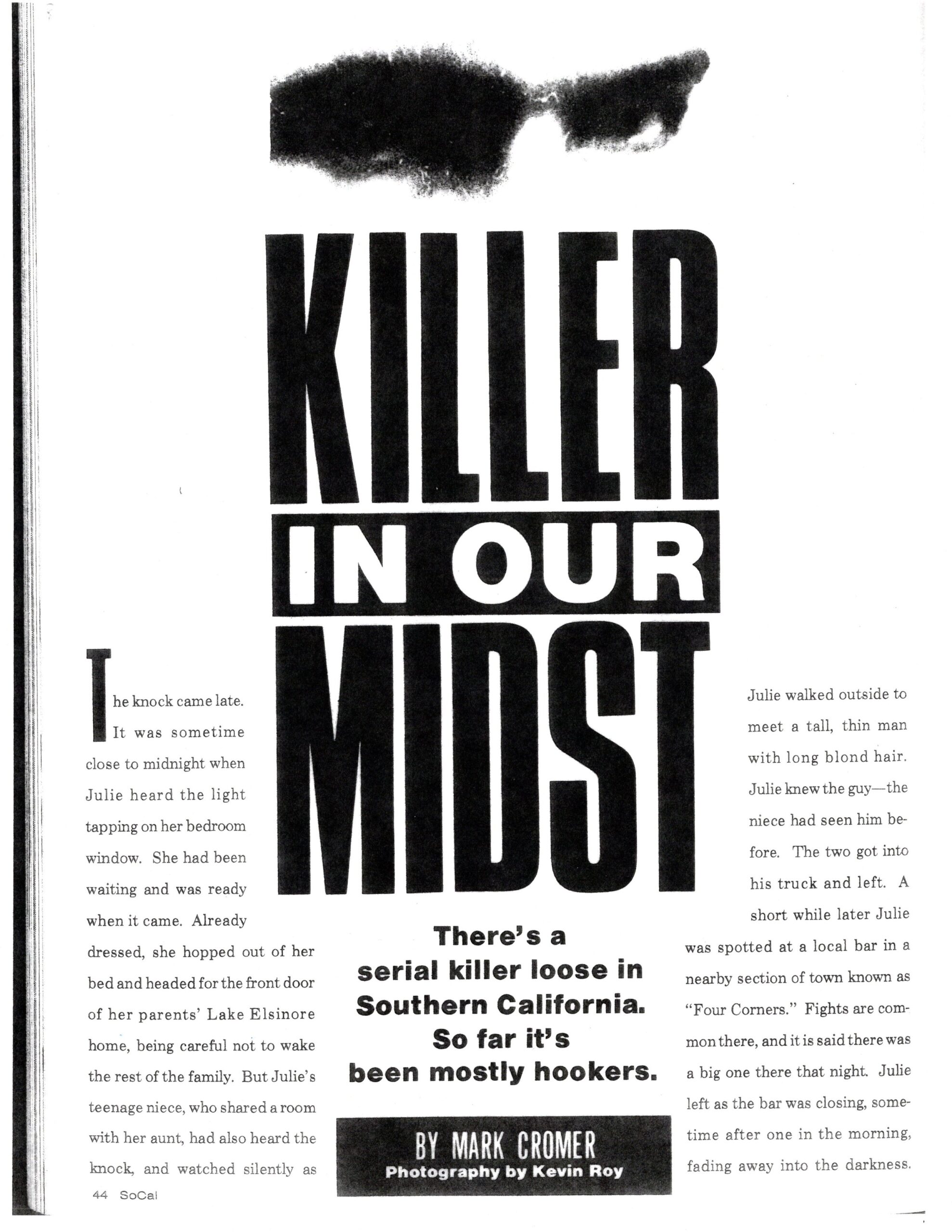
Over the years I posted a variety of my crime reporting to The Cromer Reader, including Killer In Our Midst, my 1991 feature story for Inland Empire Magazine on the rash of hookers that were getting picked up, killed and dumped across Riverside and San Bernardino counties. I spent quite a bit of time on the ground around Lake Elsinore, the old resort community in Southern California that had fallen on hard times and where the killer had been hunting some of his street walking victims. Along with my old pal and great photographer Kevin Roy, we spent time with some of the working girls in and around Lake Elsinore along with family members of victims. A year after my story was published, the cops took William Suff, a Riverside County employee, into custody as he was cruising an area known for prostitution in his van. Of course, in his van. I knew it wouldn’t be a VW Bug, though Theodore Bundy pulled that hat trick off for a spell. Suff was convicted of murdering a dozen women and sentenced to death.
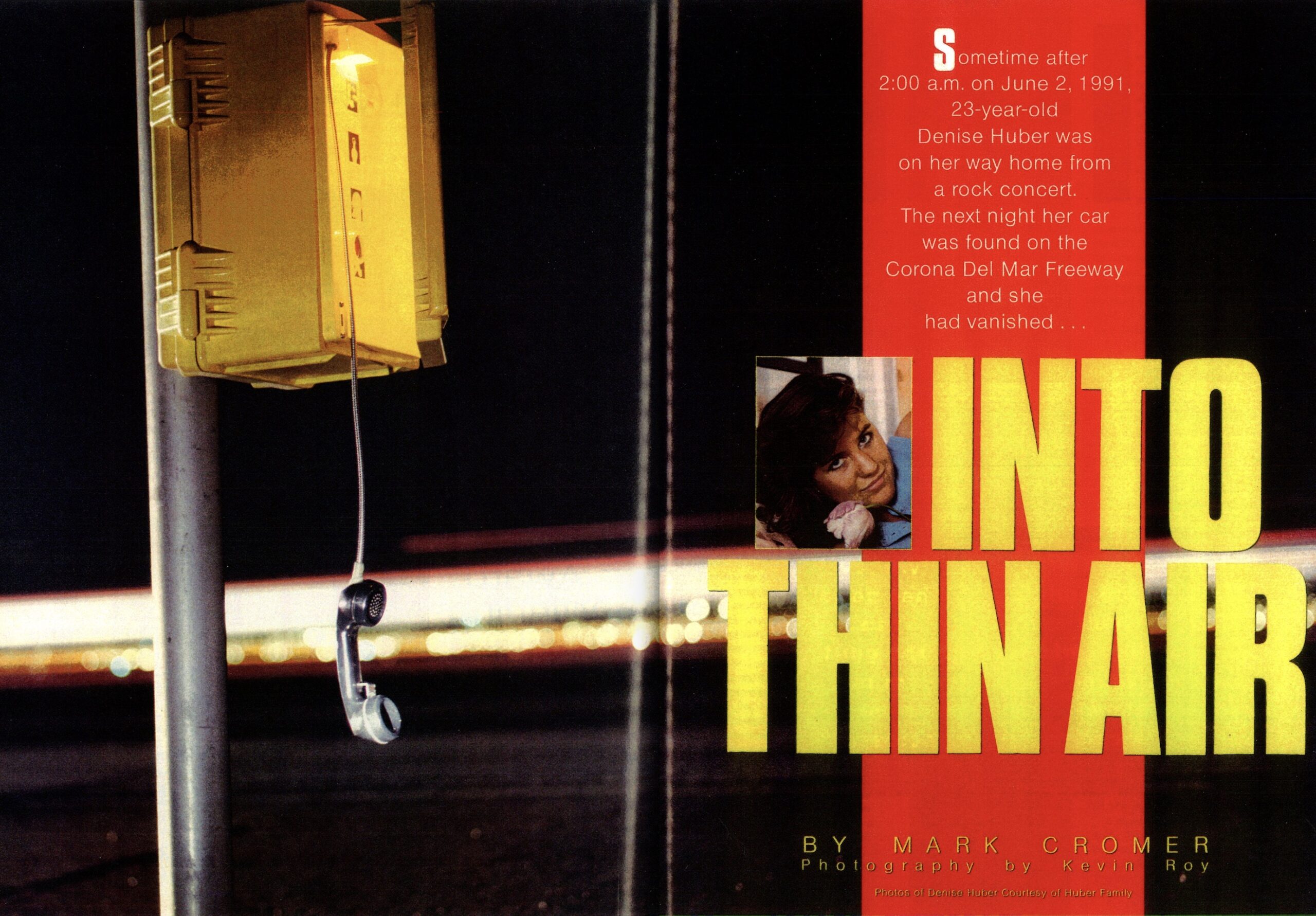
I also posted Into Thin Air, my feature story first published in June 1992 by Southern California Magazine, which covered the disappearance of 23-year-old Denise Huber as she was driving home from a Morrisey concert in Los Angeles, her car found on the Corona Del Mar Freeway not far from her parents Newport Beach home in June of 1991. When I picked up the story, Huber had been gone for nearly a year and I’ll never forget when her parents took me into her bedroom, which they had left absolutely untouched from the night she had disappeared (save for what the detectives looked at and took) and their heartbreaking answering machine greeting which opened with a statement that they would accept any collect call from Denise and a ‘Baby we love you.’ On that story, I also interviewed her friends that were the last people to see her alive, as well as the homicide detectives working the case (Huber was critical missing, and that goes to Robbery/Homicide) and others. It was another mystery and who dunnit, but tragically I knew she was dead, as did the detectives working the case. The family had been preyed upon by private investigators and others vowing to solve the case and “find” their daughter, and crazy ‘tips’ came in from as far away as London from people claiming to have seen Denise, but it was all nonsense disguised as optimism. Det. Lynda Giesler told me at one point that she had a gut feeling that Huber had probably made a split-second decision to get into a car on the side of the freeway after her car broke down and it proved to be a fatal mistake. Gielser had nearly 30 years on the force, a resume dating to the 1960s, which is to say her hunch wasn’t the product of a course she took in the Academy, but hard experience.
And she was right.
Years later, law enforcement authorities would discover Huber’s frozen body in the back of a stolen moving truck in Arizona. Still bound and gagged, Huber’s body was so well preserved an initial identification could be made visually. John Famalaro was arrested, charged, tried and convicted of first-degree murder and sentenced to death in California, which sadly we all know now is utterly meaningless. He’ll live out his days on Death Row. But is his description of what occurred on the night he killed Huber, Falamaro told investigators he pulled up alongside her on the freeway as she was walking toward a call box, asked her if she needed a ride to a service station, and when she accepted and got in his car, he hit her in the face with a hammer.
Det. Giesler was right. Huber had made a split-second decision to get into the car of a seemingly clean-cut Good Samaritan and it proved to be a fatal mistake.
But the blood and guts of American crime writing only carries my interest so far these days, as I spent years on the crime beat and covered a steady diet of daily carnage that was enough to hold over any writer in perpetuity, so I infused The Cromer Reader with a wide array of other editorial pursuits of mine; such as sex, drinks and rock n’ roll.
Among the constellation of general interest cultural stories that I programed into the site, A New Intimacy was an earlier feature story I first wrote for The Los Angeles Times that the paper published in the mid-1990s, when it was still a Chandler family behemoth that dominated the West Coast news market. The story followed the lives of ordinary Americans who had suffered spinal cord injuries that had put them into wheelchairs, a subject I had grown familiar with while working as the Media Liaison for Casa Colina Centers for Rehabilitation in Pomona, one of the nation’s premier physical rehabilitation hospitals. While spinal cord injuries are overwhelmingly experienced by young males, I included Ellen Stohl in my story as she had broken critical cultural ground by becoming the first woman Playboy ever featured in a pictorial who was also a wheelchair user.
A quarter-century ago, it would be difficult for me to have truly grasped just how pervasive pornography would become in American culture. At the dawn of the Millenium, I had already been reporting on and writing about commercial pornography in the United States as a cultural phenomenon for well over a decade and was one of the first journalists in the U.S. to do so from an editorial vantage point that wasn’t anchored in a ‘vice’ perspective. When I first started covering mainstream commercial porn in the U.S. during the twilight of the Reagan Administration, the adult entertainment industry was already grossing billions, employing tens of thousands of Americans and, yes, entertaining via their prurient interests, tens of millions of American men and women across the nation—but the industry was still almost exclusively reported on as criminal enterprise. As a young journalist running a new college magazine, I decided I was going to do my part to change that by honestly exploring the many different elements of the industry.
By the time George W. Bush rolled into Washington D.C. on a legacy admission, one that provided the American nation with one of the most disastrous presidential administration’s in its history as the country leapt into wars that turned into ‘nation building’ exercises even as mass migration continued to sweep tens of millions of foreigners across the homeland’s frontiers and into its teeming cities and hollowing heartland with catastrophic consequences for its citizens, the American cultural landscape had developed a bipolar disorder with porn: it was denounced as a cancer-like societal ill and considered a criminal enterprise by Uncle Sam, yet it was never more popular with the American people who demanded ever more quantities of it in ever higher potency servings.
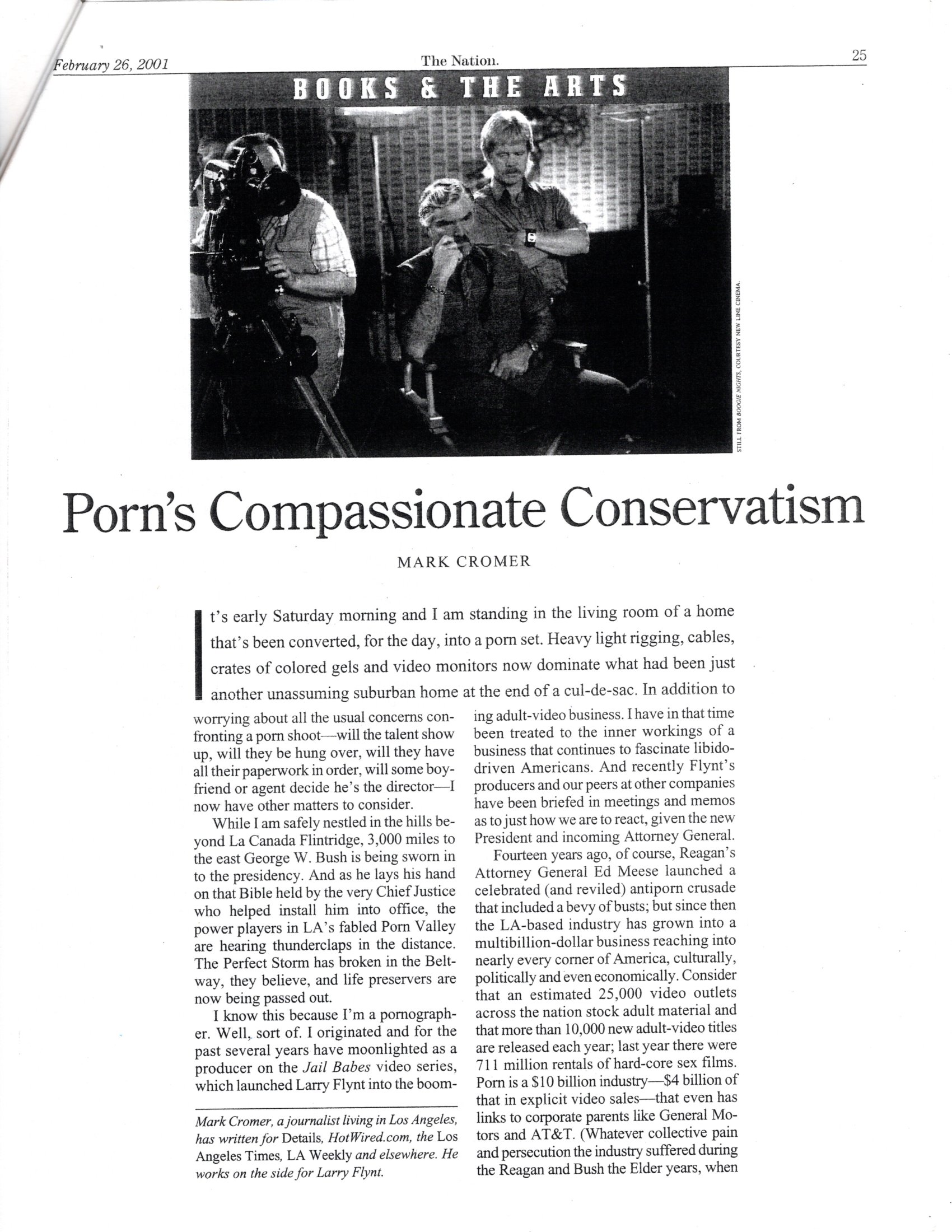
It was against this national milieu that I wrote Porn’s Compassionate Conservatism in 2000 for The Nation, one the oldest magazines in America and one with a gravitas that far exceeds its circulation. The essay explored the renewed jihad that Bush Jr. launched against porn with Attorney General John Ashcroft leading its charge (Ashcroft infamously had the bare breasts of the Spirit of Justice statue covered inside the Department of Justice’s Great Hall as an example of the modesty codes he intended to enforce across the land), and the piece also illuminated the rollicking rise of porn as an early expression of the Sexual Revolution that emerged in the 1960s and 70s. My essay became the launch point for Frontline’s documentary American Porn that aired on PBS nationally in 2002 and the producers interviewed me for the film.
While Ashcroft, like Attorney General Ed Meese before him, proved unable to stamp out an industry that’s based around an art form that’s as old as the written word and the earliest visual depictions that humans have been inspired to create, the porn industry face its only true existential moment in modern times during the HIV crisis and particularly during the later 1990s when the deadly virus jumped into the heterosexual side of the business courtesy of an infected male that appeared to have given the virus to at least four female performers. I reported on the outbreak for the LA Weekly and was the first reporter to track down and interview Marc Wallice, the veteran performer who had contracted HIV and went on to perform with numerous women on camera while positive for the virus and despite early testing protocols that had been voluntarily developed by the industry. My resulting cover story The Last Ride made it up on The Cromer Reader and became the inspiration for the documentary Porndemic, which also featured interviews with me and aired on Showtime in 2018.
Among the other articles covering the porn industry to appear on The Cromer Reader are The Hedonist, which went up in April 2016 and is an episode of my still gestating memoir by the same name that explores the world of commercial pornography in the United States and takes readers through my entrance at Larry Flynt Publications in Beverly Hills. I also included Ronnie & Me, a breezy column that I had written years earlier that chronicled my social and professional friendship with one of the greatest American porn stars to ever enliven the industry: Ron Jeremy. I had the good fortune to get to know Ron over three calendar decades and always enjoyed his company, whether it was on set somewhere in the Hollywood Hills or at some of the rocking parties that were thrown in LA when metal still ruled The Strip or just having lunch or dinner with him at one classic eatery or another. Behind his Ralph Kramden everyman schtick was a very erudite cat who was a well-read critical thinker and political junkie and he also possessed some surprisingly accomplished skills on the piano.
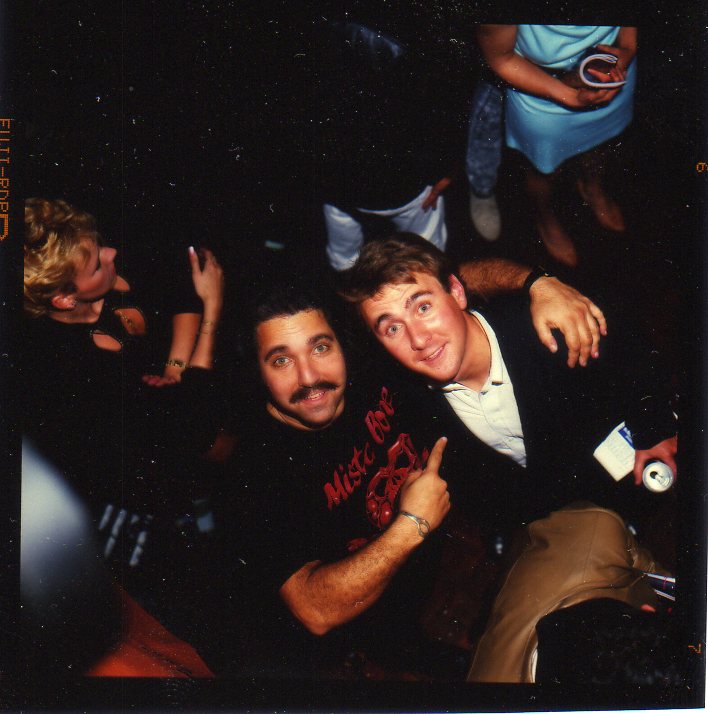
In my experience, Ronnie was just a lovely guy, a reliable swordsman and he was guided by an even bigger heart, he was a real tree-hugger who meant it.
That he was ruthlessly devoured by a blizzard of allegations late in his life is tragic but of no surprise given the atmosphere that now prevails in which accusers are auto-declared ‘survivors’ and the accusation alone is now the verdict. A presumption of innocence—once the bedrock of our Constitutional republic—is as dead as the founders who conceived it. As a matter of record, Ronnie denied the allegations level against him and I happen to believe him. Unless he is convicted at trial by a jury of his peers, a proceeding in which he is allowed to present an affirmative defense and confront his accusers in open court, I will consider him innocent of the crimes he has been accused of and come what may will fondly recall the good times we shared together in an era most amazing.
The name Paul Little doesn’t mean anything to most people, but in the early 1990s a photographer by that name who had worked for the news wire service United Press International (UPI)—the venerable syndicate that once gave the Associated Press (AP) a run for its money and had its iconic correspondent Helen Thomas in the White House briefing room from JFK to Obama—had decamped from Florida where UPI had deployed him and landed in Los Angeles hellbent to remake himself in the world of commercial pornography.
And thus, Paul Little became ‘Max Hardcore.’
If the world of commercial pornography is consistently one thing it is transitory. Easy come, easy go. Here today, gone later today. Johnny come lately, there’s a new kid in town.
Yet Little’s emergence as Max Hardcore on the Los Angeles porn scene in the aftermath of the first Gulf War seemed different, at least to a handful of people who were paying attention to the industry’s cultural reflection pool. When Little filmed himself emerging from a sewage opening in the street, he was sending a message as much about America as he was about himself and with each passing video he brought to market, Little proceeded to serve up sexually-explicit fare that seemed more rooted in a visceral misogyny than any industry filmmaker of memory before him.
It struck me as if Little was embracing the Andrea Dworkin school of radical feminism and agreeing that sex between a man and a woman is fueled by an undercurrent of animus that each hold’s for the other. And with the character Max Hardcore, Little was in effect channeling back what they were offering up for men, with a cheery advisory of: ‘Suck on this, ladies.’
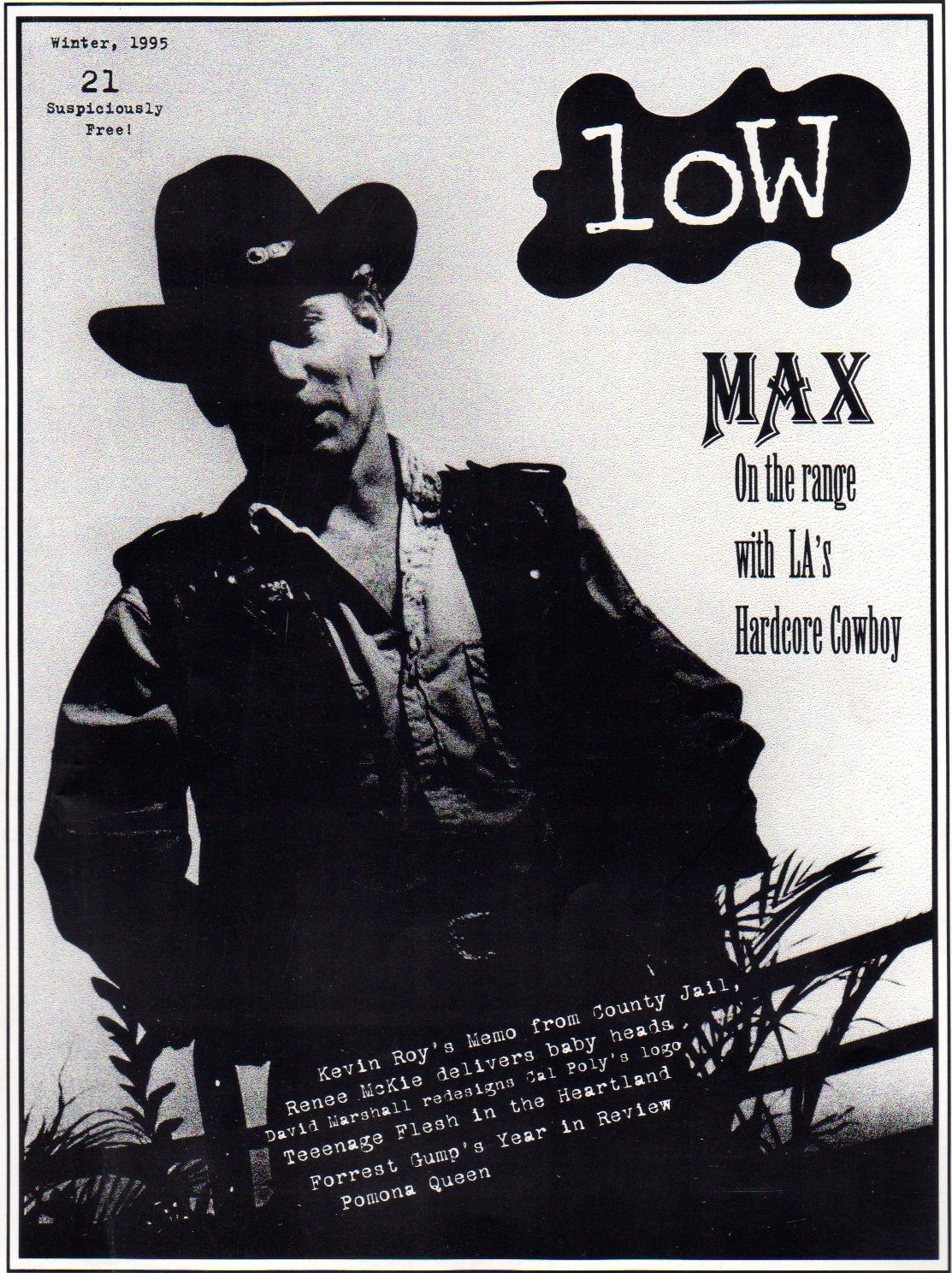
In the later winter months of 1994, I decided that Little’s rise in Los Angeles was ripe material for the tens of thousands of college students who were reading my magazine Low and I set out to spend some time with the creator of Max Hardcore in his vast mansion atop the hillsides of Alta Dena. After also sounding out feminists, anti-porn Christian activists, free speech attorneys, obscenity prosecutors and a bevy of mainstream porn producers that Little was given heartburn to with his work, my story Maximum Hardcore was published on the cover of Low in the opening months of 1995.
It was the first mainstream news story that reported on who Little was, what he was doing and why it mattered. The story caught fire and brought Little to the attention of newsrooms around the country, raising his profile and perhaps broadening the prosecutorial target on his back. I stayed in touch with Little through the years, running into him at various social events and parties, including a memorable pool party in Ft. Lauderdale when I was in Florida working a case for Kroll, and he was always appreciative of my writing the first intellectually serious journalistic explorations of what he was doing with porn. Little had actually had the Maximum Hardcore cover of Low enlarged into a massive poster, colorized it, framed it and hung it in his mansion.
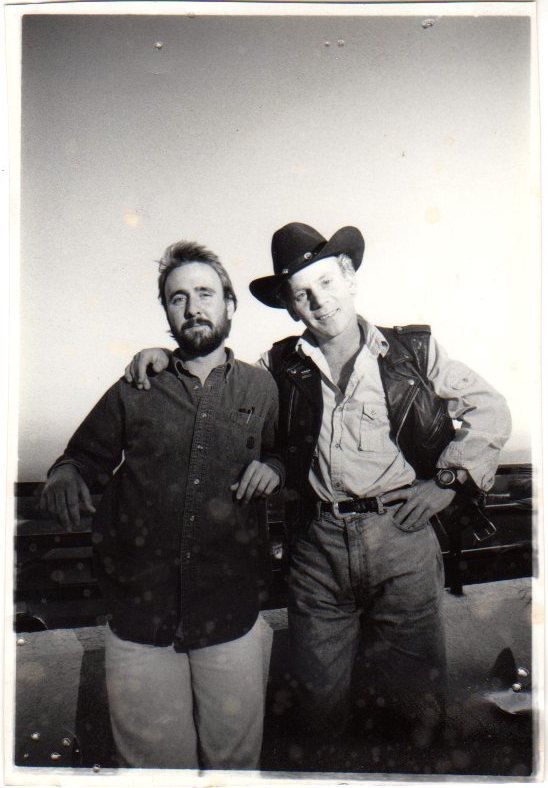
I took it as an honor. Since putting the story up on The Cromer Reader a decade ago, nearly 10,000 more readers have been able to peek behind the scenes and understand the rise of one of American porn’s most controversial auteurs.
The fire burning inside writers tend to lead them to live the drinking life, a term at least partially coined by New York journalist Pete Hamill’s memoir, and my own path has been populated by a dizzying array of bars, lounges, dives and watering holes of varietals stretching across a vineyard that offered everything from 5-Star opulence to blood-still-on-the-floor tinder boxes.
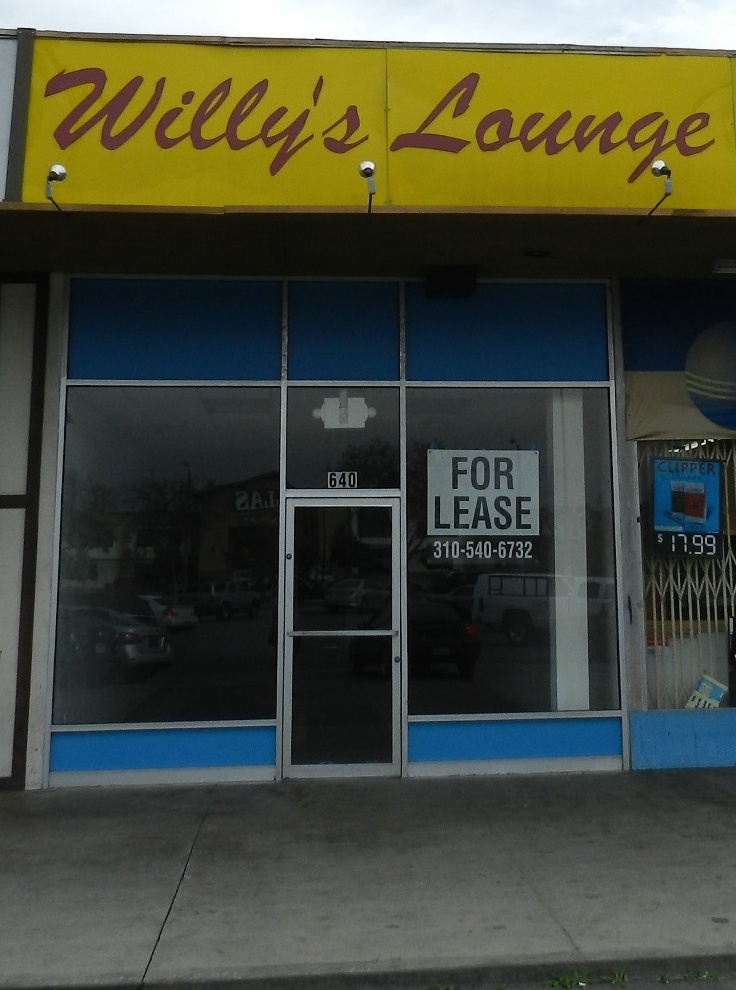
So, when Willy’s Lounge in Pomona went under after nearly a half-century of serving every serious drinker within the hardscrabble city and many more from as far away as LA at one time or another during its legendary run on Holt Avenue, I offered my own eulogy in early 2016 for this fallen strip mall monument entitled In Memoriam: Willy’s Lounge Finally Takes a Dive. The column recalled the highwater mark of the 1970s and 80s bar scene in the Pomona Valley, an era when stand-alone drinkeries like Willy’s still ruled the lush seas. These were the glory days of The Beehive, The Jet Set, The Madhouse, Grandma’s Attic, Kennedy’s Pub, Dean’s, The Back Door, The Club (and later, Characters) along with many more and Willy’s had taken its place among them.
In July of 2018, I published a rarity for The Cromer Reader—a poem I had written back in 2003 from the woods of Flagstaff as a paean for an old creative collaborator and drinking buddy of mine in Los Angeles and more specifically as an homage to our long run in the City of Fallen Angeles. Ode to Koyne Miles (Upon His Death)was offered up as a ‘why not’ of sorts, as I felt it made the baseline cut of publishability while offering an unvarnished lyrical take on the pros and cons of drinking seriously.
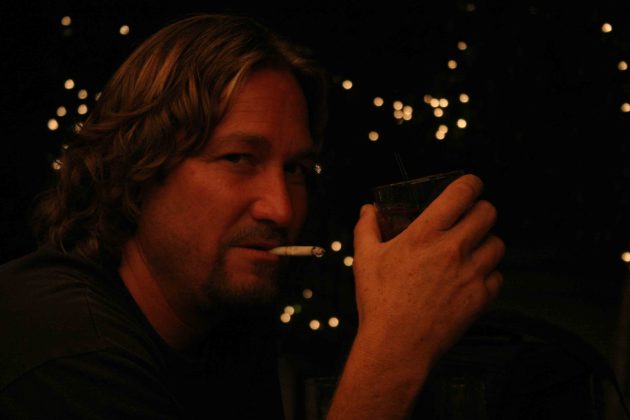
Somewhat along the same line of employing a more personally focused writing lens, I also used The Cromer Reader to feature reflections such as A Semi-Luddite Looks at 60, which offered a consideration of opening my sixth decade on the planet that was centered on my successive summer adventures across Europe and America 40 years earlier, marveling at the passage of time and the end of an era and the nation that had defined it. Retracing the mad jag I had run with my Irish writer friends as we made our way from Paris to Athens and then into the Aegean Sea during the summer of 1984, I took the vantage point of more than four decades later to explore what those early adventures actually meant, along with the follow up tour across America that followed in the summer of 1985 as we drove from Los Angeles to Washington D. C., New York and Boston, before zigzagging through Canada and back across the heartland in search of what Jack Kerouac and Art Garfunkel had teased was out there.
In November of 2016, I published Cle Elum: A Cascadian Heart of Gold, a column that took readers along for a ride into a small mountain town nestled in the Cascades, that formidable range separating coastal Washington and its Puget Sound culture from the sweeping farmland of the eastern frontier of the Evergreen State as it rolls toward the comforts of Idaho. I found Cle Elum to be a refreshing reminder of the American people that built the nation and grew it into a powerhouse before being betrayed and sold out in a globalist auction.

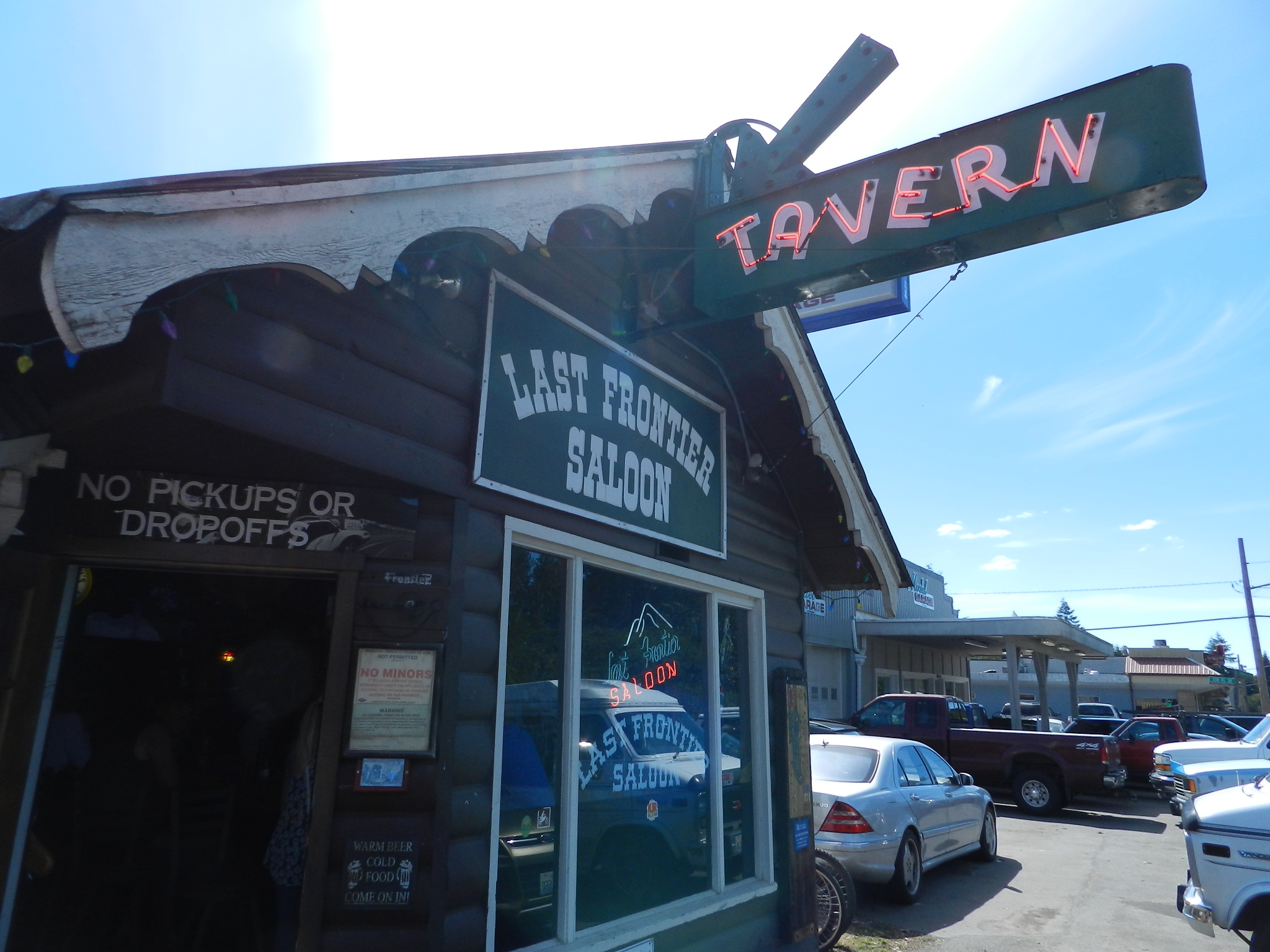
Likewise for Fall City, a postage stamp burg nestled alongside the Snoqualmie River just a short jump off of I-90 that I had stumbled into years earlier while taking the scenic route back from Lake Stevens, passing through the barn-rich pastures and prairies of Monroe, Duvall and Carnation before finding The Last Frontier Saloon standing watch just across the river. The saloon would become a makeshift HQ during my later explorations of Fall City and the drive north, back up to places like Snohomish, and Fall City, USA was my love letter to that country which went live on this site in the summer of 2016.
From the dawn of 2014 through the close of 2022 I spent a lot of time in Issaquah as well, getting to know the now nuevo monied hipster town rather intimately, and I devoted a fair amount of time writing about those experiences as well, perhaps most notably with my essay The Californication of Washington, a detailed account-cum-warning that the rustic genetics of Washington were indeed in peril as the same forces of development that laid waste to my once beloved California were coming to bear in its northern sister. The essay takes readers up and down and across Puget Sound as the summer of 2018 began to trail out, and it opened with an epigraph from the now infamous declaration by Reason magazine editor Katherine Mangu-Ward as she gushed about America desperately needing to have a population of at least 1 billion people. The correlation between population growth and the environmental and civic degradation it ensures through the development meant to accommodate it while enriching its purveyors is no longer a matter of debate between sane people, but that doesn’t stop grifters and shills like Mangu-Ward and her fellow-traveler Scott Galloway from making media tours espousing the joys of a planet where 50 billion people (literally) are peacefully e-biking along the urban greenbelts that allegedly exist in their minds. Like California a generation or two before it, the defilement of Washington is underway and will ultimately result in the same outcome.
The essay opens with my observation: “Surrendering a quality of life is a curious thing.”
That it is a surrender is an important distinction to make, since it highlights that what is being taken away is, indeed, be handed over without much of a fight. And what is being taken away is a quality of life, one that took many generations to establish. As I paint the picture of what was, what is and what is coming for residents from Issaquah to Anacortes to Bainbridge Island and beyond, I note that I encounter a sense of collective detachment, that the marauding developers and predatory private equity barons running roughshod over the state are somehow impervious to the social will.
It’s a defeatism cloaked as nihilistic apathy and it is perhaps the most critical element that land rapists and civilization killers rely upon to prevail: a prevailing civic sense that nothing can be done, so just sit back and watch it all disappear. If they convince you that nothing can be done to stop it, then nothing will be done to stop it.
The Californication of Washington has proven to be the most widely read story on The Cromer Reader to date, with the 7,300-word essay reaching nearly 38,000 people so far, and chalking up thousands of ‘likes’ before the Facebook de-amplification and social media shadow bans began disappearing readers and their ‘likes’ faster than Mark Zuckerberg can steal a promising idea.
Along with that essay, I have featured the landscape of the Pacific Northwest and its dysfunctional mecca Seattle in numerous other pieces, from Washington Chainsaw Massacre, in which I chronicled the mansionization of Mercer Island and the horrifying sprout of Atlas in Issaquah, to When Puget Sound Becomes Poop Harbor, which provided readers with a fun little gallop through the wilds of Seattle’s progressive death cult politics.
In late December 2016, as the first year of The Cromer Reader came to a close in what proved to be a watershed political year for America, I fired off a reflection entitled A Long December, which chronicled some of my adventures drifting around Puget Sound and the Olympic Peninsula in northern Washington state, where even the misting shorelines of Moclips was no match for the changes rolling over the country. I always thought that bit of journaling was a solid bit of early work in The Cromer Reader, capturing the right balance and blend of my personal experience with the larger societal topics I wanted to address at the time.

The self-immolation of Issaquah’s Equity-caliber venue, The Village Theatre, was a strange and somewhat painful story for me to cover. I had watched in real time and from a box seat a theatre that I had come to love for its intimate but reliably invigorating productions commit mass revolutionary suicide in the wake of the death of the dope-peddling street savage known as George Floyd. In a progression that was played out all over America and with dizzying speed, the artistic and business brain trust that guided the theatre decided—apparently in about 12 minutes time—that the best response for a theatre in Issaquah, Washington, to a drug-dealer’s death in Minneapolis, Minnesota, was to instantaneously self-immolate its stage productions and its patrons as white racist settler colonialism that must confess, suffer and atone.
I wrote Death of a Theatre to fully explore the statements and actions of the production team that helmed Village Theatre, which in 2020 was Executive Producer Robb Hunt and Artistic Director Jerry Dixon. Even superficially, the dynamic apparent in the pair was helpful in understanding how such a critically acclaimed playhouse could commit a ritualistic artistic suicide with such a spontaneous combustion of self-loathing. Robb Hunt was a co-founder of the theatre and he had been in its wheelhouse for nearly a half-century. The Village Theatre was very much his baby. But Hunt was also an elderly white man in the Pacific Northwest and as such subjected to the relentless atmospherics of progressive dogma and its associated Seasonal Affective Disorder. When Dixon, a much younger black gay man from New York City arrived on the scene not long before the street doper Floyd caught his date with destiny in Minneapolis, he undoubtedly saw in Hunt an old, frail and timid white collaborator who was preparing to retire and who was ripe for Blaxploitation at the right juncture.
When the BLM terror strikes exploded across America in the summer of 2020, Dixon got down to business. The pair immediately released a statement denouncing the whiteness of the theatre, its staff and its productions as well as the whiteness of its patrons that had supported the theatre for nearly a half-century. The pair vowed to launch an equity campaign that would be all encompassing; including driving whites off the stage and out of the seats of the theatre in a decolonizing campaign that whites would have to pay for, of course.
It was both fascinating and nauseating at the same time, but getting a serious exploration of just what had happened to Issaquah’s inventive gemstone up on The Cromer Reader was an exercise of my own artistic freedom to answer the sad and sick claims that a terrified old liberal like Hunt let Dixon defecate all over the patrons of the theatre before collecting his reparations ransom and jetting back to Gotham, his work in Issaquah done.
And my column caught the attention of a couple of local digital news sites in Issaquah that reposted it, causing a secondary progressive meltdown on Squak Mountain.
Since rock n’ roll had long played a critical creative role in my life, inspiring my artistic drive and often informing the focus of my life’s lens, it seemed fitting to publish a few reflections on the once popular genre that has seen its dominance of American culture fade during the demographic remaking of the nation and as the mindless rhythmic incantations of ghetto gangsters increasingly settles like urban ozone over a crowded valley.
One of the first rock-related pieces I published on The Cromer Reader was A Vulture Takes Flight, which I wrote in the spring of 2017 after watching drummer Don Henley defile the legacy of The Eagles by continuing to tour with a band using that name after Glenn Frey had died a year earlier. Many bands before had trod down this slimy path for however much gold they thought waited at the end of it and I was reminded of Pete Townsend and Roger Daltrey’s dubious decision to milk the legacy of The Who for many years after I saw them on their first Farewell Tour in 1981, stumbling along as just a duo but using the name of the band they anchored for some of rock’s most glorious moments, such as their performance at Monterey Pop in 1967.
But there was something particularly vile about Henley’s rank display of milking the name and the legacy of The Eagles for as much money as he could possibly squeeze out it. Perhaps in part it was that in era between 1980 and 1993, when the band had taken what Frey had dubbed a 13-year vacation, Henley had stepped out from behind his drumkit and forged a new image of himself as a solo artist that specialized in proselytizing about the glories of Thoreau and the wickedness of excess consumerism and the commercialization that fuels it.
It seemed Frey’s cadaver hadn’t even gone cold yet before Irving Azoff was at Donny’s door with plans for another gajillion dollar stadium tour and Henley couldn’t bring himself to say “No!” to that kind of scratch, even if it meant hitting the road with an absurdist lineup disguised as The Eagles, with Frey’s kid on guitar and Vince Gill pressed into service as a new ‘Eagle.’
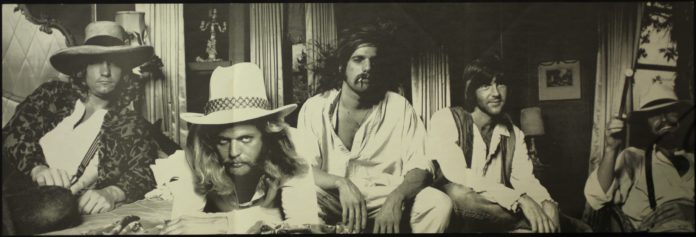
At the time I was starting to write A Vulture Takes Flight, I happened to run into my old neighbor David Lindley, the guitar virtuoso whose lead work on Jackson Browne’s Running on Empty will forever shine off turntables everywhere, and I took the opportunity to ask him about his take on what Henley was doing and why? Lindley’s work as a session player in the 1970s stands as one of the most prolific profiles of a hired guitar gun since the mid-1960s when Jimmy Page and Glen Campbell left an amazing body of work across a startling range of artists’ albums, and he had the added insight of having played both onstage and in the studio with The Eagles during their epic 1970s flight.
I think Lindley summed it up rather succinctly when he told me: “We keep expecting grace and dignity and respect for legacy in rock when we shouldn’t. That’s just the sad fact of it.”
Another sad fact that I covered in The Cromer Reader was the long fall of rock on college campuses that were becoming increasingly rigid in their social strictures as crafted and enforced by progressive proctors and hall monitors, taking up the issue with Has Campus Politics Killed The College Band? My essay contrasts the arrival of the 44th annual Kohoutek Music & Arts Festival at Pitzer College in March 2017 with my experiences as college student bouncing around the foundational years of the festival in the early 1980s and the notable changes to the campus atmosphere that have created a deforming effect of how music is composed and presented and even enjoyed. It was a fun romp through yesteryear to recall the mid-1980s heyday of the college music scene and the ‘alt’ bands that emerged, from Green on Red and Camper Van Beethoven to The Long Ryders, The Beat Farmers, Dramarama and The Unforgiven with Mojo Nixon along for the ride.
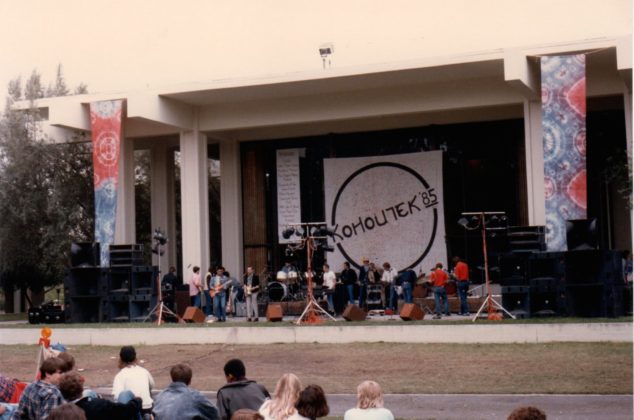
It was the apex of an era that had dawned across America in 1964 following The Beatles appearance on The Ed Sullivan Show and that ultimately created a landscape where there were ‘garage bands’ of teens pounding out their primitive rock odes on every other block throughout suburbia. The communal bonds of the street music that emerged in the 1960s and 70s had grown deep by the 1980s and much of the youth iconography of the era was centered around clubs, pubs, bars and theatres that all offered local bands a stage to offer listeners a chance to sample their art. Hanging out, watching and listening to an endless stream of new bands was a widespread pastime that for some became a lifestyle, but as the 1990s whimpered to a close and with it the reign of Bill Clinton the hightide of American rock n’ roll began to recede as computer-generated ‘beats’ emerged from the ghetto to saturate the land with slurred glories of ‘niggas and ho’s and bitches’ (oh my!).
Another side of the gangsta garbage that polluted American airwaves like the stench from a broken sewer pipe was the distinctly white genre of something called ‘emo rap,’ which appears to be a musical category populated largely by mentally ill and emotionally disturbed individuals reflecting on various self-harm and suicide trips set to dirges and videogame muzak. I had been blissfully unaware of the emo rap scene (as I suspect most sane Americans were as well) until the overdose death of Gustav Elijah Åhr in November 2017, which apparently shook the mortician rap scene to its core.
Known among fans by his comic book moniker ‘Lil Peep,’ Åhr’s heavily tattooed face and his penchant for rapping nonstop about killing himself, depression, killing himself, drug use, killing himself, death, killing himself, getting high and, of course, killing himself, should have left precisely no one surprised when he drugged his way off the planet at the age of 21, at least to anyone who was so bored with their own lives as to pay attention for even a moment to his, yet no less of a cultural gatekeeper than The New York Times rushed news stories into print heralding Åhr as the Bob Dylan for his generation.
While unintended, the Old Gray Lady’s praise of the nihilistic idiocy of ‘Lil Peep’ was perhaps an accurate estimation of the contributions of a generation that defined much of its artistry by facial ink scrawls of a prison-work variety.
So I added my own digital ink in estimation of this fallen rap star, publishing So Long Lil Peep (And Thanks For The Oxygen Bump) on The Cromer Reader in December 2017. My essay explored what meaning, if any, could be ascribed to be to the abbreviated life of Gustav Åhr and the fascination he and his fellow travelers had with expedited self-destruction. Opening with a lede that offered a full and unflinching disclosure—“I am getting old”—I plumbed the depths of what passes as ‘youth culture’ in the second decade of the 21st Century and found myself facing stories headlined with ‘A First Date in a Cemetery with Lil Peep.’
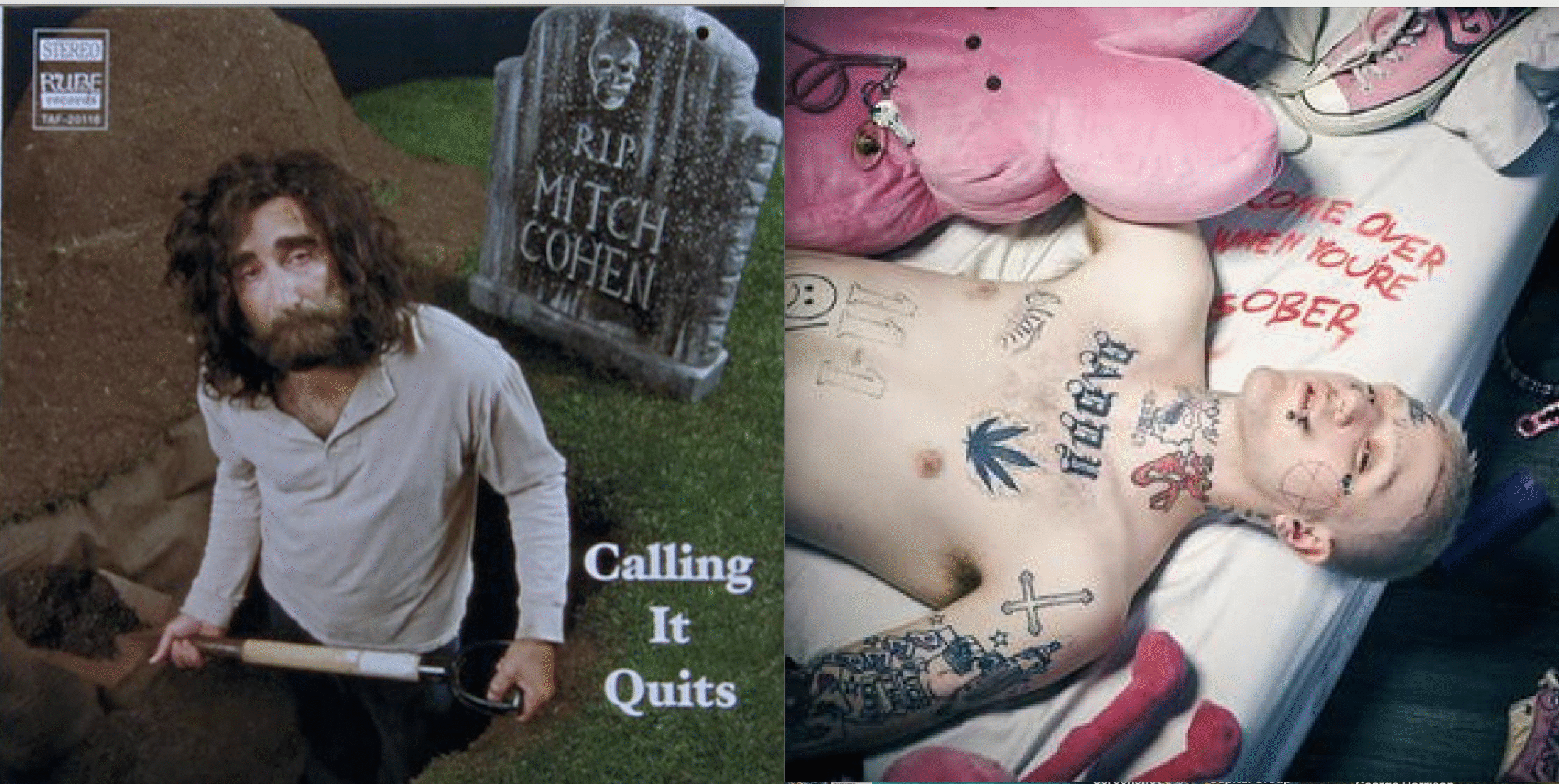
Well, I did have fun extricating some of the humor that seemed to abound in the tearful analysis of Lil Peep, the faux shock expressed about a deeply troubled kid who only stopped talking about killing himself after he finally succeeded in doing so. And about 16,000 readers took it in and, I suspect for the most part, laughed right along with me.
I have been politically active since before the day I registered to vote on my 18th birthday and I spent most of the 1980s as an activist Democrat, one of the pinnacles of which was working on the campaign of Sen. Alan Cranston during his tough reelection fight against the formidable and telegenic challenger Ed Zschau in 1986. By the late 1990s, however, it was becoming increasingly clear to me that the party was becoming overtly hostile to heterosexual white males like me and seemed to be descending ever deeper into the grip of progressive death cultists who preached America was a racist construct and worked for its destruction.
As the 2000s got underway I submitted my resignation from the Democratic Party and re-registered as Decline to State, an independent designation in California, and once The Cromer Reader went online, I began offering various political essays on the site. Perhaps most notable among them was GOP Finis, as I spent a couple of months writing from Seattle on an essay that would track what I see as the definitive and irrevocable national destruction of the Republican Party along the same lines of the fate it met in California where it has been completely shut out of statewide offices for two decades running. I think I brought it in at about 23,000 words, which is a pretty significant heft, but I think it was mostly well spent in chronicling the GOP’s surrender to a business class elite that was intent on abandoning the nation’s working class in favor of open borders and cultural castration.
Following the trajectory of its national party since the Vietnam era, I noted that the Republicans were able to run the board with impressive successive wins that saw it triumph in five of six presidential elections between 1968 and 1988. But while the electoral victories the Reagan era produced appeared to signal overwhelming Republican dominance, in GOP Finis I tracked how the Democrats were content on surviving long enough for their investments in mass immigration and cultural reprogramming paid off with the dividends they were destined to deliver.
The Republican Party’s long-term viability has always been anchored in the white working and middleclass population, and with that demographic of heritage Americans targeted for reduction and destruction, the GOP cannot and will not survive the passing of a white majority population in America.
While GOP Finis was the lengthiest political deconstruction I have published to date on the site that dealt with the looming electoral implosion of the Republicans, in the summer of 2018 I set my sites on writing a post-mortem of the Democratic Party as the enterprise’s transition from the house of JFK and LBJ into a progressive death cult was complete. The resulting essay was entitled Jonestown 2018: The People’s Temple of California and it used the 40th anniversary of the Jonestown massacre in Guyana as the template to explore what had become of the Golden State since the Rev. Jim Jones had once held court in San Francisco and Los Angeles. Using Marshall Kilduff and Phil Tracy’s excellent reportage on The People’s Temple that Clay Felker published in his New West magazine in August 1977—that was the exposé that blew the whistle on much of the shadier elements to Jones operation and led to the minister and his flock fleeing the United States for mass murder in the jungle—I revisited and explored an element that has been intentionally written out of the history of the cult: it’s deep and abiding connection to the California Democratic Party. In very real terms, my essay points out, that political genealogy has continued and, if anything, it’s an ideological bloodline that has become even more pure as much of Jones’ core tenets have been infused into Democrat policies and platforms. Just about 23,000 readers have perused my analysis and if even just a handful concur with my conclusions, then I figure I’ll have done my job as a writer.
In September 2021, I pivoted again to the Republicans and took aim at longtime political kingmaker Karl Rove, the man once dubbed ‘Bush’s Brain,’ and spent considerable digital space in assessing Rove’s impact on the party and the nation. The result was The Notorious P.I.G. and it ran with a subhead advising: “As America dies the GOP’s electoral serial killer Karl ‘Pig Man’ Rove is still trolling the polls and positioning postmortem Republican political bodies all along his highway to hell.” I always thought that Rove resembled a pig and used the subhead to make an Easter egg reference to the ‘Pig Man’ episode of Seinfeld.

The column hit and caught the attention of Ann Coulter, who promptly promoted it on her Twitter account, and so to did radio show provocateur Michael Savage, who pushed the column out on his website. About 10,000 readers gave my column a spin and I have occasionally pondered the fact that Rove may have been one of them, or so I can only hope.
My disdain for Rove was matched by my escalating distaste for Hillary Clinton, the one-time paramour for the white working class in this country who, as far as I was concerned, had gone on to completely betray them for perceived political advantage that ended up costing her the White House. In July 2016, with The Cromer Reader just a few months old, I published Race in America: Whites Want a Real Conversation, Not Another Lecture. The column took issue with the Democratic Party’s infuriating contempt for the white working class that built the party and its front runner’s emerging position of hostility toward white Americans.
I returned to the theme of white working-class America being politically betrayed again in January 2021, just days after the storming of the Capitol in what could accurately be described as a white riot. This time it was Donald Trump who had abandoned the largest voting bloc in the nation in favor of reaching out and pandering to communities that either hated him or were never going to vote for the GOP in any meaningful numbers. The resulting column, Just Desserts, explored the comic book urbanization of Trump’s campaign during the final stretch in 2020 and how ill-advised and devastatingly costly his decision to turn on working white America had been—it lost him the election and ensured four years of a toxic cabal that ran the government from behind the slurring zombie of Joe Biden.
As she had with my takedown of Karl Rove, the always invigorating Ann Coulter snapped up my column Just Desserts and reposted segments from it on her Twitter feed, driving nearly 7,000 readers to the story over time. Nearly three times that number of readers digested my spoof on Jared Kushner, Trump’s freakish son-in-law who has long appeared to suffer some form of global Aphasia-meets-Autism, staring silently from a mask frozen in a perpetual emotionless wasteland. I took to The Cromer Reader again in July 2018 and posted Jared Kushner: The Damien Thorn of Our (End) Times?, a fun potential explanation of Kushner’s strange appearance and performance in the Trump White House: postulating that he could be the Antichrist. I noted that Kushner had just wrapped up the purchase of 666 Fifth Avenue and surmised perhaps that wasn’t a coincidence after all.

It was fun to write the Kushner-as-Antichrist column and aside from about 20,000 reads the column also got picked up by some overseas news aggregator outlets and cited as a serious estimation of the potentially sinister origins of one of the president’s top advisors. Now that was funny, to see my column cited by the India Daily News as a serious consideration of whether Kushner might have been born of a jackal and have the Mark of The Beast on his crown somewhere. Yes, yes, keep looking for clues and someone get ahold of Carl Bugenhagen in Tel Megiddo and alert him to keep the daggers safe and ready for fast retrieval.
So here we are, a decade down the road since The Cromer Reader first went live and what a pleasant surprise the first ten years have been. All in around 300 stories posted with the majority of them long-form explorations of a fairly diverse array of subject matter. The editorial stature of this modest site is solid, it can clearly hold its own against large commercially positioned sites, at least when it comes to the quality of writing and the dedication of the staff…ha! But it is a fact that the Ghost of the Internet Past is a boneyard filled with the skeletons of websites that launched and were dead and gone in no time at all. It really does take a fair commitment to keep a site filled with relevant material and worth a reader’s time, particularly if it is readers that you are reaching out for—actual readers, much like deep thinkers, are a diminishing of powerful demographic in this era of ours.
The baseline metrics of The Cromer Reader are fulfilling enough for me: somewhere about a million people have traversed its pages over the past decade and took a dip in its editorial offerings, taking away with them a little better understanding of the subject matter and the world we live and its contrasts with the world that came before it.
And like a lazy summer afternoon in the Southern California of my youth, the prose presented here is in no hurry, no rush, to race the reader through to a tidy conclusion sold out of the box. No, like Supertramp, at The Cromer Reader you’re going to take the long way home. And enjoy the ride on the way there.
What awaits this site over the next decade is hard to say, particularly from a perspective that I happen to share that the planet is traipsing along the edge of global calamity of an Extinction Level Event. Of course, that’s not too alarming to me all things considered, since I have had my day in the sun and soaked up every moment of it for all that it was worth and I don’t particularly harbor a deep desire to see a Gen Z mostly comprised of cognitively-impaired mooks inherit anything they didn’t earn. Perhaps that’s a little cold, but I am getting a lot meaner in my senior citizenship and don’t have much patience for All the Young Dolts, apologies to Bowie and Mott the Hoople.
But I think as long as the fingers still work and the mind is able to channel my estimations into coherent, informing, liberating and fun runs through this thing called life in the 21st Century, I will plan to keep on trucking down the road and see where it leads.
Another decade of The Cromer Reader could be quite delicious, particularly as I turn to more intimate subject matter and life experiences, using long-form narrative prose to explore and tease out the meanings of life with various women I have encountered and collaborators I have worked with and family members I managed to survive living through…I have quite a few stories to tell and more than a few records to set straight.
As the legendary Captain Hook once declared to Peter Pan: “Lie? Me? Never! The truth is far too much fun!”
And the truth is out there, so let’s get to it.